Bushnell Prime 8x42 vs Pentax Papilio II 8.5x21
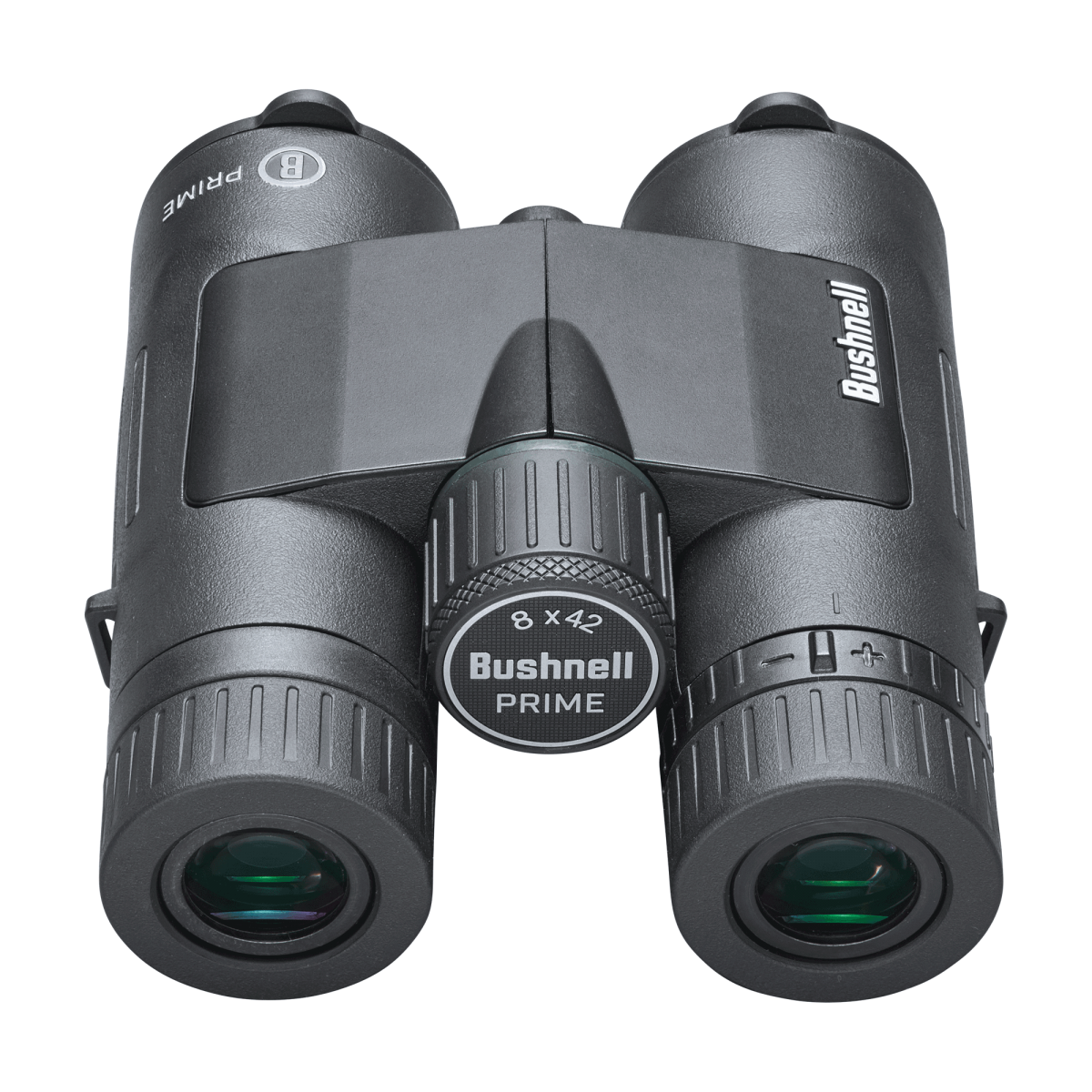
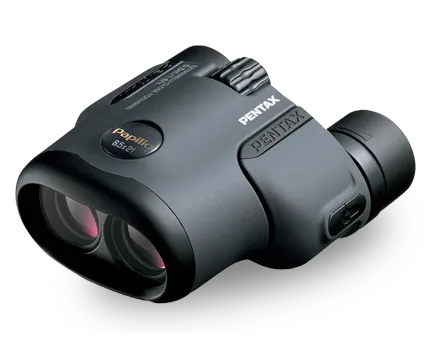
Quick take: The Pentax Papilio II 8.5x21 costs $1 less; the Pentax Papilio II 8.5x21 reaches farther (8.5x vs 8x); the Bushnell Prime 8x42 has a wider field of view (350 vs 315 ft @ 1000 yds).
Field of view, to scale
Top-down view · drawn to true scale — no exaggeration
Which one to buy
Close focus of 1.6 ft is the reason the Pentax Papilio II 8.5x21 exists. Owners describe it as a field microscope: beetles, wildflowers and pond life fill the view at arm's length, and its low-geared focus makes precise focusing that close easy. Testing found it sharp nearly to the edge with only a thin greenish fringe on harsh edges, and at 10.2 oz it goes anywhere. The Bushnell Prime 8x42, at 10 ft, can't come near that, but it is a different tool entirely and costs $1 more.
The Papilio's costs are light and weather. Its 2.5mm exit pupil against the Prime's 5.25mm means it dims noticeably at dusk and in deep shade, its 315 ft field makes fast butterflies hard to track, and owners say it is not waterproof, so canoeing and wet climates are out. The Prime is the opposite: IPX7 submersion-rated sealing, an EXO Barrier coating that sheds water, a 350 ft field, and 24mm of eye relief that owners praise with glasses. It is discontinued, so you are buying leftover stock, and owners describe fringing in high-contrast scenes and soft edges.
As an only binocular for birding, hunting or general outdoor use, the Prime is the more capable choice. The Papilio is the one to own when insects, flowers and close study are the point, and many owners will want it alongside a full-size pair rather than instead of one.
Bushnell Prime 8x42
The better all-round first binocular for birding and the outdoors, rain included, while new stock lasts.
Pentax Papilio II 8.5x21
Best for butterfly, insect and wildflower watchers who want detail at 1.6 ft and will keep it out of the rain.
| Spec | Bushnell Prime 8x42 | Pentax Papilio II 8.5x21 |
|---|---|---|
| Approx. price | ~$150 | ~$149 |
| Use case | General Purpose | General Purpose |
| Magnification | 8x | 8.5x |
| Objective | 42mm | 21mm |
| Exit pupil | 5.25mm | 2.5mm |
| Field of view | 350 ft @ 1000 yds | 315 ft @ 1000 yds |
| Eye relief | 24mm | 15mm |
| Close focus | 10 ft | 1.6 ft |
| Prism | Roof | Porro |
| Glass | Standard | BaK-4 |
| Coating | Fully Multi-Coated | Fully Multi-Coated |
| Weight | 23.3 oz | 10.2 oz |
| Dimensions | 5.5 x 5.0 in | 4.6 x 4.3 in |
| Warranty | Limited Lifetime | 25-Year Limited |
Feature comparison
Bushnell Prime 8x42
- ✗ED Glass
- ✓Phase-Corrected
- ✗Dielectric Coating
- ✓Waterproof
- ✓Fogproof
- ✗Image Stabilized
- ✓Tripod Adaptable
- ✗Magnesium Body
- ✗Locking Diopter
Pentax Papilio II 8.5x21
- ✗ED Glass
- ✗Phase-Corrected
- ✗Dielectric Coating
- ✗Waterproof
- ✗Fogproof
- ✗Image Stabilized
- ✓Tripod Adaptable
- ✗Magnesium Body
- ✗Locking Diopter
What birders say
Bushnell Prime 8x42
- ✓Budget reviewers repeatedly land on the same verdict: probably the best pure-value roof prism you can buy - an excellent image at the most affordable price tested
- ✓Both novice and experienced birders in testing described the image as genuinely superb for the money
- ✓350 ft field of view is on the narrow side for an 8x42, though fine for beginners learning to find birds
- ✓Legitimately rugged: reviewers who took them on rough outdoor adventures called them ideal knock-around glass, backed by Bushnell's lifetime 'Ironclad' guarantee
- ✓IPX7 waterproof and nitrogen purged - real submersion-rated sealing at a price where many rivals are merely 'weather resistant'
- ✓EXO Barrier lens coating molecularly bonds to the glass and sheds water, oil, and dust - a flagship-line feature trickled down to $150
- ✓Reasonably light at 23.3 oz - noticeably easier on the neck for all-day carry than most 42mm glass
- ✓Twist-up eyecups with a listed 24mm of eye relief work well for eyeglass wearers, which owners specifically call out
- ✗No ED glass - chromatic aberration is perceptible in high-contrast scenes, the clearest tell of the price point
- ✗Edge of the field goes soft with visible distortion - sharpness is a center-of-image affair
- ✗Overall sharpness is adequate rather than exceptional; a spec-sheet step below Bushnell's own Engage and Nitro lines
- ✗Low-light performance is respectable for the class but the standard glass and coatings give up real dusk time to ED-glass rivals
- ✗Focus and diopter feel are budget-grade - functional, not refined
- ✗Bushnell's brand reputation has slipped among optics enthusiasts since its premium heyday, and forum recommendations often steer to Nikon or Vortex first
- ✗The accessories (case, strap, covers) are as basic as you'd expect at $150
- ✗Resale value is negligible - unlike alpha glass, these are buy-and-use, not buy-and-trade
Pentax Papilio II 8.5x21
- ✓Same unmatched 1.6 ft close focus as the 6.5x, but with 8.5x magnification - small, slow insects fill dramatically more of the view at arm's length
- ✓Forum users specifically favor the 8.5x for slower and smaller subjects, where the extra power reveals detail the 6.5x can't
- ✓Expert testing found the image sharp from center nearly to the edge with only minimal softening
- ✓Chromatic aberration control rivals far costlier glass - just a very thin greenish fringe on the harshest high-contrast edges
- ✓Won a best-compact award from a major review site, which scored it 75% overall
- ✓Low-geared three-turn focus makes critical focusing at 20 inches genuinely precise - fine-tuning is a breeze
- ✓Twist-up eyecups with three firm click-stops and 15mm eye relief let eyeglass wearers see the full field without tunneling
- ✓Thoughtful extras: snug custom case, quick-attach strap system, and a built-in quarter-inch tripod thread
- ✗Tiny 2.5mm exit pupil is the dimmest in the Papilio family - image brightness drops off noticeably in dusk, heavy shade, or dim interiors
- ✗Narrower 315 ft field of view makes finding and tracking fast-moving butterflies harder than with the 6.5x - the forum consensus favors the 6.5x for quick subjects
- ✗8.5x magnification amplifies hand shake, both up close and at distance
- ✗Not waterproof or fogproof - reviewers say light rain is acceptable but rule it out for canoeing, kayaking, or wet climates
- ✗No objective lens covers included
- ✗Small 17mm focus wheel is difficult to operate in winter gloves
- ✗Diopter ring doesn't lock
- ✗The low-geared focus that helps at macro distances makes rapid refocusing on distant subjects slower
Bushnell Prime 8x42 vs Pentax Papilio II 8.5x21: common questions
Can the Pentax Papilio II 8.5x21 replace the Bushnell Prime 8x42 for birding?▾
Only in good light. The Papilio's 2.5mm exit pupil dims quickly at dusk and in shade, and owners say its narrower field makes moving subjects harder to follow. The Prime's 5.25mm exit pupil and 350 ft field make it the stronger general birding binocular.
Is the Pentax Papilio II 8.5x21 waterproof like the Bushnell Prime 8x42?▾
No. Papilio owners say light rain is fine but rule it out for paddling or wet climates. The Prime is IPX7 submersion-rated and nitrogen purged, with a lens coating that sheds water and dust.
How close can the Bushnell Prime 8x42 focus compared with the Papilio II 8.5x21?▾
The Prime focuses to 10 ft, the Papilio to 1.6 ft. That gap is the whole point of the Papilio: owners use it to study insects and flowers at arm's length, which no full-size binocular at this price can do.