Bushnell Prime 8x42 vs Bushnell Prime 10x42
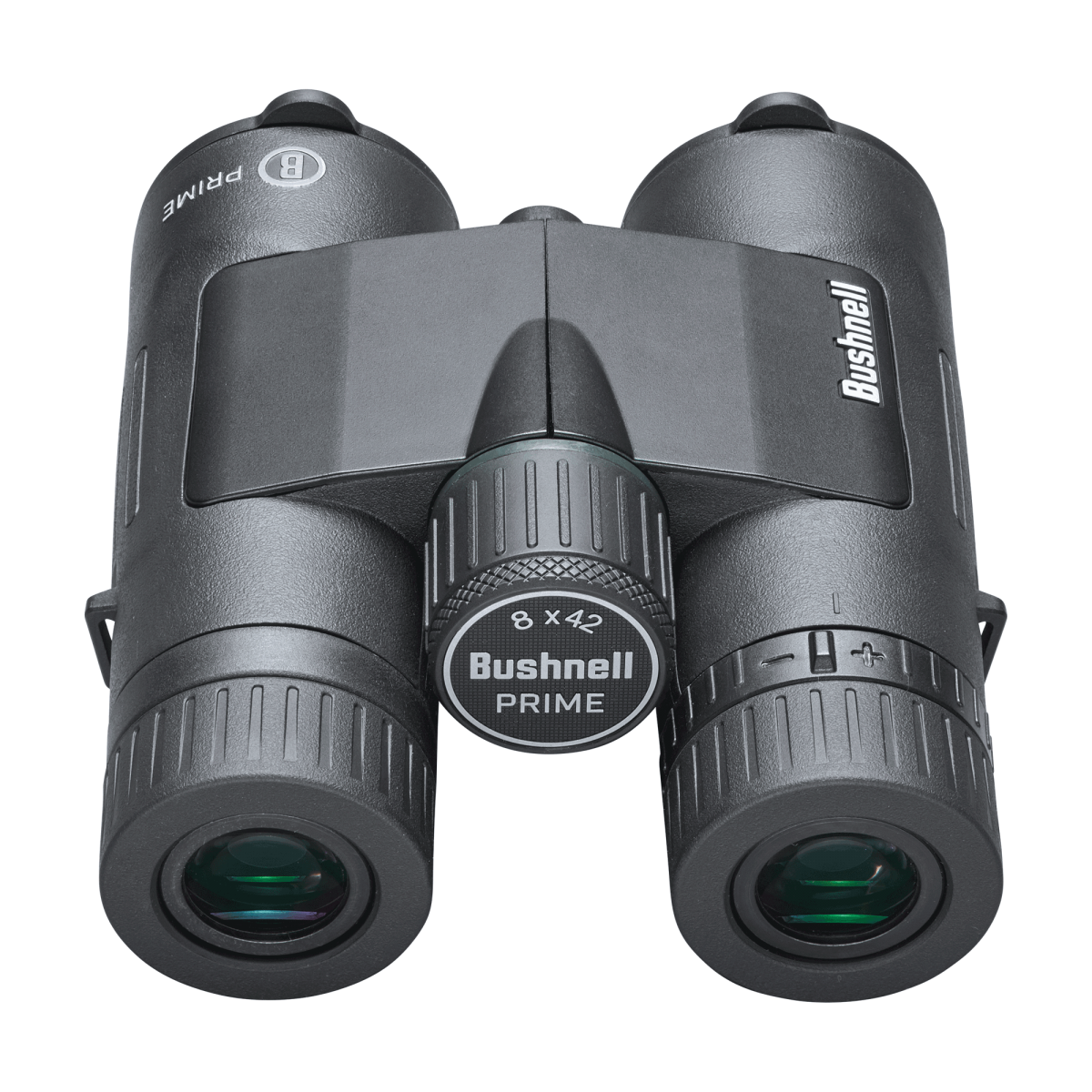
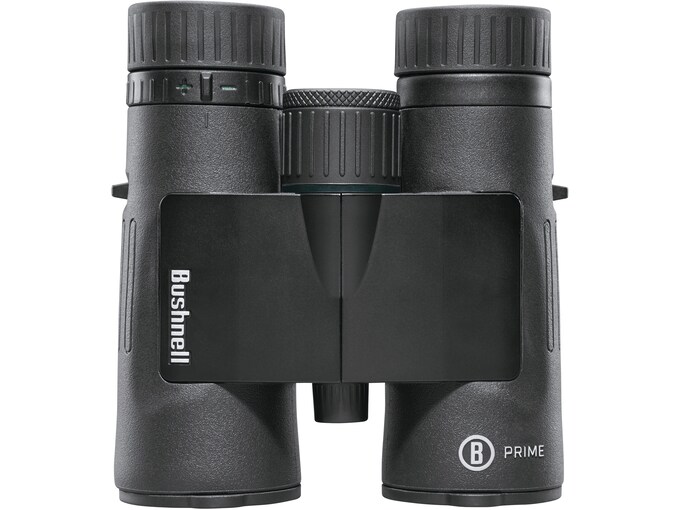
Quick take: The Bushnell Prime 8x42 costs $10 less; the Bushnell Prime 10x42 reaches farther (10x vs 8x); the Bushnell Prime 8x42 has a wider field of view (350 vs 305 ft @ 1000 yds).
Field of view, to scale
Top-down view · drawn to true scale — no exaggeration
Which one to buy
With the Prime line discontinued, this is a choice between two leftover siblings that share a body, coatings, sealing and a 23.3 oz weight, $10 apart. The difference is magnification, and the 8x42 wins it for most people. The Bushnell Prime 8x42 shows 350 ft against the 10x's 305 ft, has 24mm of eye relief against 19mm, a 5.25mm exit pupil against 4.2mm, and 10 ft close focus against 12 ft.
Owners of the Bushnell Prime 10x42 are candid about why that matters: the narrow field plus 10x shake makes birds hard to find for beginners, and the budget glass can't fully reward 10x with extra detail. Its chromatic aberration is also stronger, moderate in the center and strong at the edges. Owners of the 8x42 see fringing too in high-contrast scenes, along with soft edges, but describe an image that surprised even experienced birders for the money.
What the two share is toughness: IPX7 submersion-rated sealing, nitrogen purging, an EXO Barrier coating that sheds water and dust, and eyecups owners say work well with glasses. Reach is the 10x's only argument, and its own owners say it suits open-country hunting and prairie glassing where that reach pays off. Everywhere else, including a new birder's first pair, the 8x42 is the better binocular and the cheaper one.
Bushnell Prime 8x42
The better first binocular for birders, eyeglass wearers and most hunters: wider, brighter, easier to hold steady and $10 cheaper.
Bushnell Prime 10x42
Worth it only for open-country hunting or prairie glassing where reach matters more than a wide, steady view.
| Spec | Bushnell Prime 8x42 | Bushnell Prime 10x42 |
|---|---|---|
| Approx. price | ~$150 | ~$160 |
| Use case | General Purpose | General Purpose |
| Magnification | 8x | 10x |
| Objective | 42mm | 42mm |
| Exit pupil | 5.25mm | 4.2mm |
| Field of view | 350 ft @ 1000 yds | 305 ft @ 1000 yds |
| Eye relief | 24mm | 19mm |
| Close focus | 10 ft | 12 ft |
| Prism | Roof | Roof |
| Glass | Standard | Standard |
| Coating | Fully Multi-Coated | Fully Multi-Coated |
| Weight | 23.3 oz | 23.3 oz |
| Dimensions | 5.5 x 5.0 in | 5.5 x 5.0 in |
| Warranty | Limited Lifetime | Limited Lifetime |
Feature comparison
Bushnell Prime 8x42
- ✗ED Glass
- ✓Phase-Corrected
- ✗Dielectric Coating
- ✓Waterproof
- ✓Fogproof
- ✗Image Stabilized
- ✓Tripod Adaptable
- ✗Magnesium Body
- ✗Locking Diopter
Bushnell Prime 10x42
- ✗ED Glass
- ✓Phase-Corrected
- ✗Dielectric Coating
- ✓Waterproof
- ✓Fogproof
- ✗Image Stabilized
- ✓Tripod Adaptable
- ✗Magnesium Body
- ✗Locking Diopter
What birders say
Bushnell Prime 8x42
- ✓Budget reviewers repeatedly land on the same verdict: probably the best pure-value roof prism you can buy - an excellent image at the most affordable price tested
- ✓Both novice and experienced birders in testing described the image as genuinely superb for the money
- ✓350 ft field of view is on the narrow side for an 8x42, though fine for beginners learning to find birds
- ✓Legitimately rugged: reviewers who took them on rough outdoor adventures called them ideal knock-around glass, backed by Bushnell's lifetime 'Ironclad' guarantee
- ✓IPX7 waterproof and nitrogen purged - real submersion-rated sealing at a price where many rivals are merely 'weather resistant'
- ✓EXO Barrier lens coating molecularly bonds to the glass and sheds water, oil, and dust - a flagship-line feature trickled down to $150
- ✓Reasonably light at 23.3 oz - noticeably easier on the neck for all-day carry than most 42mm glass
- ✓Twist-up eyecups with a listed 24mm of eye relief work well for eyeglass wearers, which owners specifically call out
- ✗No ED glass - chromatic aberration is perceptible in high-contrast scenes, the clearest tell of the price point
- ✗Edge of the field goes soft with visible distortion - sharpness is a center-of-image affair
- ✗Overall sharpness is adequate rather than exceptional; a spec-sheet step below Bushnell's own Engage and Nitro lines
- ✗Low-light performance is respectable for the class but the standard glass and coatings give up real dusk time to ED-glass rivals
- ✗Focus and diopter feel are budget-grade - functional, not refined
- ✗Bushnell's brand reputation has slipped among optics enthusiasts since its premium heyday, and forum recommendations often steer to Nikon or Vortex first
- ✗The accessories (case, strap, covers) are as basic as you'd expect at $150
- ✗Resale value is negligible - unlike alpha glass, these are buy-and-use, not buy-and-trade
Bushnell Prime 10x42
- ✓One of the cheapest legitimate 10x42 roof prisms with real waterproofing - IPX7 submersion-rated and nitrogen purged at $160
- ✓Testing found virtually no astigmatism - point light sources stay clean, which is unusual discipline for a budget optic
- ✓Owners report low-light images staying usable noticeably longer than expected for the class, helped by BaK-4 prisms and fully multi-coated optics
- ✓EXO Barrier coating bonds to the lenses and repels water, oil, and dust - genuinely useful on a binocular destined to live in a truck or blind
- ✓Twist-up eyecups get specific owner praise for working comfortably with eyeglasses
- ✓Light for a 10x42 at 23.3 oz, and the grippy rubber armor takes abuse - reviewers position it as ideal starter glass for hunting and hiking
- ✓Bushnell's lifetime Ironclad guarantee covers it - rare peace of mind at this price
- ✓Center-field sharpness is adequate for real hunting and wildlife use - reviewers call it a solid entry point for recreational hunters and beginner birders
- ✗Chromatic aberration is the documented weak spot - moderate in the center and strong at the edges, perceptible across the whole field in testing
- ✗Coma and distortion get quite strong at the field edge, so the outer third of the image is noticeably degraded
- ✗305 ft field of view is narrow even for a 10x42 - combined with 10x shake, beginners can struggle to find birds
- ✗Sharpness is described as adequate, not exceptional - fine feather detail and distant antler points are where it runs out
- ✗No ED glass; Bushnell's own Engage X, Engage EDX, and R7 lines exist precisely to fix this model's optical shortcomings
- ✗10x on a budget optic magnifies hand shake without the resolution to reward it - many reviewers steer entry-level buyers to the 8x42 instead
- ✗19mm eye relief is shorter than the 8x42's but still workable for most eyeglass wearers
- ✗Optics enthusiasts on forums rarely recommend it over the Nikon Prostaff or Vortex equivalents - it wins on price and toughness, not glass
Bushnell Prime 8x42 vs Bushnell Prime 10x42: common questions
Should a beginner buy the Bushnell Prime 8x42 or the Prime 10x42?▾
The 8x42. Owners of both say its wider 350 ft field, steadier view and larger exit pupil are more forgiving, and that the budget glass cannot fully reward the 10x's extra magnification with extra detail.
Which Bushnell Prime has more eye relief for glasses, the 8x42 or the 10x42?▾
The 8x42, at 24mm against 19mm. Owners of both praise the twist-up eyecups with glasses, but the 8x42's extra room makes the full field easier to see, especially with deep-set frames.