Athlon Midas G2 UHD 10x42 vs Hawke Frontier ED X 8x42
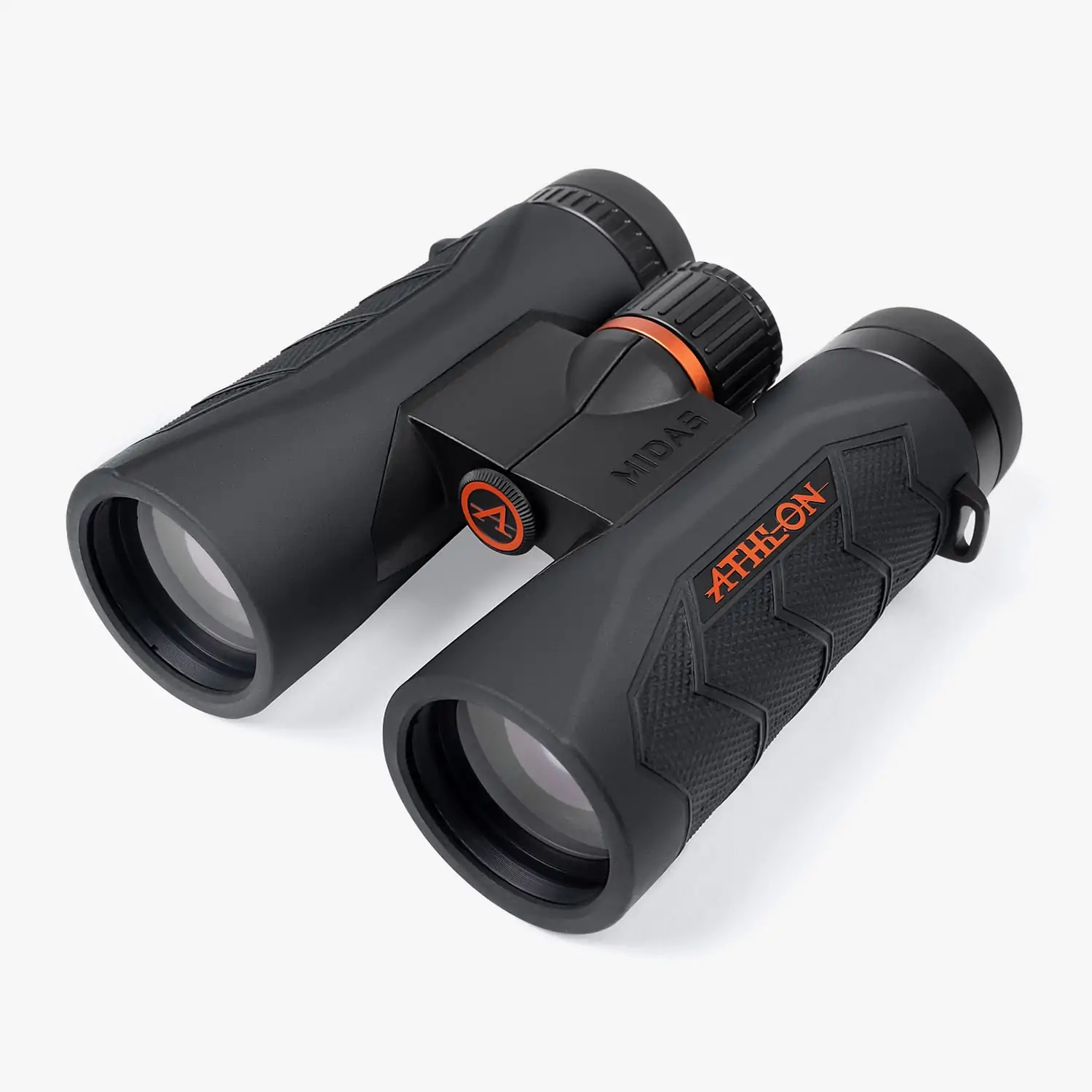
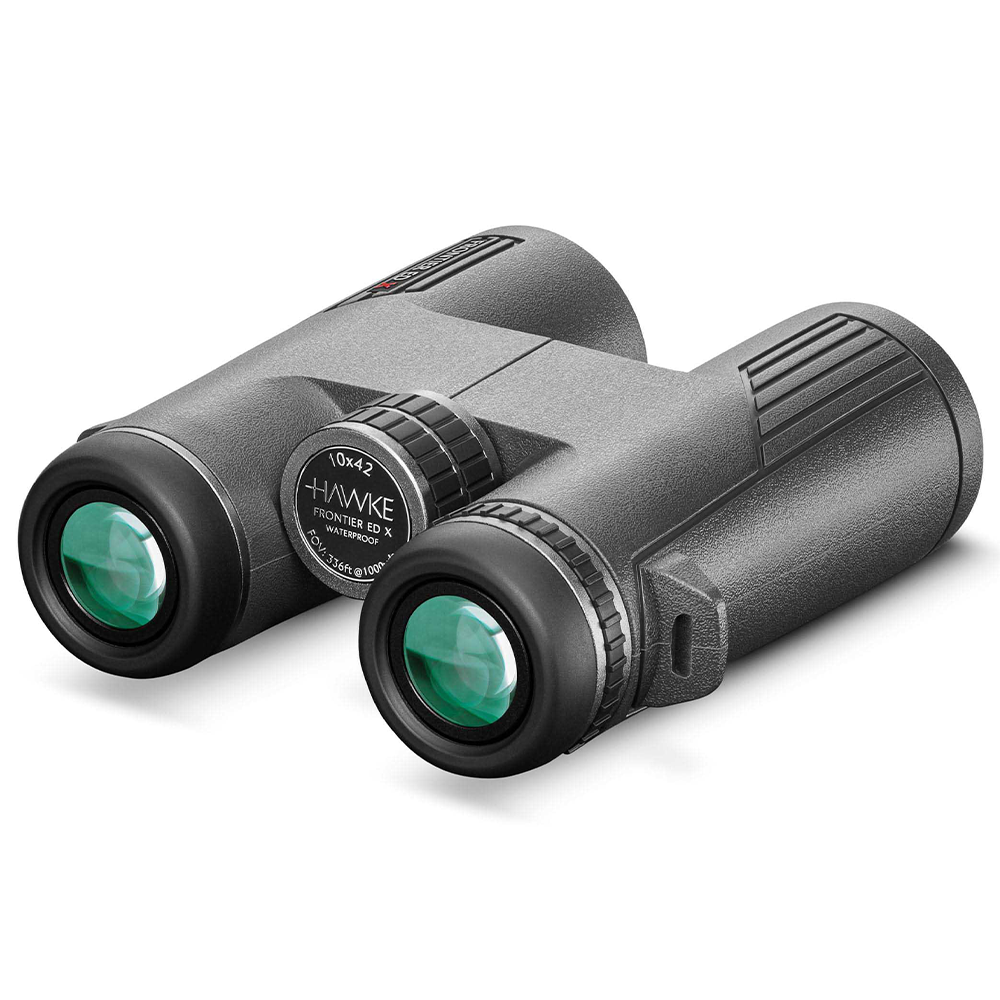
Quick take: The Athlon Midas G2 UHD 10x42 costs $13 less; the Athlon Midas G2 UHD 10x42 reaches farther (10x vs 8x); the Hawke Frontier ED X 8x42 has a wider field of view (426 vs 341 ft @ 1000 yds).
Field of view, to scale
Top-down view · drawn to true scale — no exaggeration
Which one to buy
A woodland birder and a hawk watcher would split on this pair, and that is the right way to choose it, since $13 is not going to decide anything. The Hawke Frontier ED X 8x42 is about width: a 426 ft field that owners call among the widest of any 8x42, a bright, color-faithful image that holds up in harsh light, and very low chromatic aberration. Its 18mm of eye relief suits glasses, and its 6.6 ft close focus beats the Midas's 8.2 ft. Owners also rate the build, with a metal focus wheel and eyepiece housings, and a rigid case they single out as one of the best bundled with any binocular.
Its weak spot is the outer field. Owners and lab tests find sharpness falling away toward the edge, with pincushion distortion, coma and some vignetting, and buyers keep asking about glare in low sun.
The Athlon Midas G2 UHD 10x42 is the reach option that doesn't feel like one. Its 341 ft field is wide for a 10x42, owners praise a bright, high-contrast image and a smooth focus wheel, and at 23.3 oz it is lighter than the Hawke's 25.6 oz. The costs are the 10x ones: 15.2mm of eye relief that glasses wearers find tight, more hand-shake, and a 4.2mm exit pupil against the Hawke's 5.25mm, on a line whose low-light performance one test lab already questioned.
For most birders the Hawke is the better binocular, and for glasses wearers it is the clear one. The Midas earns its place for shorebirds, hawk watches and open-country hunting, where 10x detail is worth a narrower, shakier view.
Athlon Midas G2 UHD 10x42
Worth choosing for open-country birding, hawk watching or hunting where 10x detail matters, as long as you don't wear glasses.
Hawke Frontier ED X 8x42
For most birders, especially in woods or in glasses: a far wider view, closer focus and more eye relief for $13 more.
| Spec | Athlon Midas G2 UHD 10x42 | Hawke Frontier ED X 8x42 |
|---|---|---|
| Approx. price | ~$387 | ~$400 |
| Use case | Birding | Birding |
| Magnification | 10x | 8x |
| Objective | 42mm | 42mm |
| Exit pupil | 4.2mm | 5.25mm |
| Field of view | 341 ft @ 1000 yds | 426 ft @ 1000 yds |
| Eye relief | 15.2mm | 18mm |
| Close focus | 8.2 ft | 6.6 ft |
| Prism | Roof | Roof |
| Glass | UHD | ED |
| Coating | Fully Multi-Coated | Fully Multi-Coated |
| Weight | 23.3 oz | 25.6 oz |
| Dimensions | 5.5 x 5.0 in | 5.5 x 5.0 in |
| Warranty | Lifetime | Lifetime |
Feature comparison
Athlon Midas G2 UHD 10x42
- ✓ED Glass
- ✓Phase-Corrected
- ✓Dielectric Coating
- ✓Waterproof
- ✓Fogproof
- ✗Image Stabilized
- ✓Tripod Adaptable
- ✓Magnesium Body
- ✓Locking Diopter
Hawke Frontier ED X 8x42
- ✓ED Glass
- ✓Phase-Corrected
- ✓Dielectric Coating
- ✓Waterproof
- ✓Fogproof
- ✗Image Stabilized
- ✓Tripod Adaptable
- ✗Magnesium Body
- ✓Locking Diopter
What birders say
Athlon Midas G2 UHD 10x42
- ✓341-foot field of view is exceptionally wide for a 10x42 — wider than many competitors' 8x models feel, which takes the sting out of choosing 10x
- ✓Same ED glass, dielectric-coated phase-corrected prisms, and magnesium chassis that earn the Midas line 'top of the heap' status in sub-$400 comparisons
- ✓8.2-foot close focus is typical for a 10x42 — fine for feeder birds, too long for most butterfly work
- ✓Locking diopter on this configuration, fixing the bump-prone adjuster owners flag on the 8x42
- ✓Bright, high-contrast image with fringing control that owners say rivals binoculars costing twice as much
- ✓Focus wheel runs with the same smooth, even resistance praised across the Midas G2 line
- ✓Well-balanced magnesium body under 24 ounces — light enough for all-day birding at 10x
- ✓Unconditional transferable lifetime warranty with a solid claims reputation
- ✗15.2mm eye relief is workable but noticeably tighter than the 8x42's — eyeglass wearers report having to hunt for the full field
- ✗4.2mm exit pupil compounds the line's disputed low-light performance; the dusk fade one test lab found will show up sooner at 10x
- ✗10x magnification amplifies hand-shake, and the wide field can't fully compensate for a jittery image
- ✗Focus ring and diopter collar are plastic where some similarly priced rivals use metal
- ✗No thumb indents or grip sculpting — the barrel is smooth and some hands want more purchase
- ✗Measured weight with accessories creeps past the printed spec
- ✗Street price swings between roughly $300 and $375, and at the top of that range the value case weakens against sale-priced Vipers
- ✗Reviewer opinions on the Midas line split — one major test recommended the Vortex Diamondback HD instead at similar money
Hawke Frontier ED X 8x42
- ✓Enormous field of view - among the very widest of any 8x42 on the market, a huge asset for scanning flocks and following birds in flight
- ✓Bright, colorful image that expert birding reviewers found holds up 'even in harsh lighting,' with an exceptionally flat measured transmission curve for faithful color
- ✓Very low chromatic aberration for the class - independent lab testing called the control 'a nice result' with fringing low even off-center
- ✓Magnesium chassis with metal focus wheel and metal eyepiece housings at a price where most rivals use plastic
- ✓18mm eye relief with smooth twist-up eyecups comfortably serves eyeglass wearers
- ✓Close focus of about 6.6 feet is very good for the class
- ✓The included hard case is a genuine standout - rigid, with both a full-length zipper and a magnetic quick-access flap
- ✓Multiple 'best under $500' awards and glowing verdicts from birding publications - a decorated pick at its price point
- ✗Edge sharpness falls away in the outer field - both expert birding reviews and lab testing flag the periphery as the optical weak point
- ✗Lab testing measured distinct pincushion distortion, one of its lowest-scoring categories
- ✗Coma builds in the outer field, so point sources near the edge stretch - a knock for casual stargazing
- ✗Noticeable brightness falloff (vignetting) at the extreme field edges in measurement testing
- ✗Some prospective buyers on birding forums specifically probe its glare resistance in low sun, a recurring question mark
- ✗Diopter doesn't lock - a small but conspicuous omission on an otherwise metal-clad build
- ✗Neck strap lacks quick-release clips, and the lens covers are generic
- ✗Published specs don't perfectly match independent measurements (field of view and weight both differ), which bothers detail-oriented buyers
Athlon Midas G2 UHD 10x42 vs Hawke Frontier ED X 8x42: common questions
Is the Hawke Frontier ED X 8x42's wider view worth giving up the Midas G2 UHD 10x42's magnification?▾
For most birding, yes. Owners describe the Hawke's 426 ft field as its defining trait, making it much easier to find and stay on birds. The Midas's 341 ft is wide for a 10x but still narrower, and its extra magnification pays off mainly at long range in open country.
Which has softer edges, the Hawke Frontier ED X 8x42 or the Midas G2 UHD 10x42?▾
The Hawke's edges are its known weak point: owners and lab testing report sharpness fading in the outer field, plus coma and pincushion distortion. In practice your subject sits in the sharp center, and most owners say they barely notice it while birding.
Which is better for eyeglass wearers, the Midas G2 UHD 10x42 or the Hawke Frontier ED X 8x42?▾
The Hawke. Owners say its 18mm of eye relief lets most glasses wearers see the full field, while Midas owners who wear glasses report hunting for the full view at 15.2mm.